
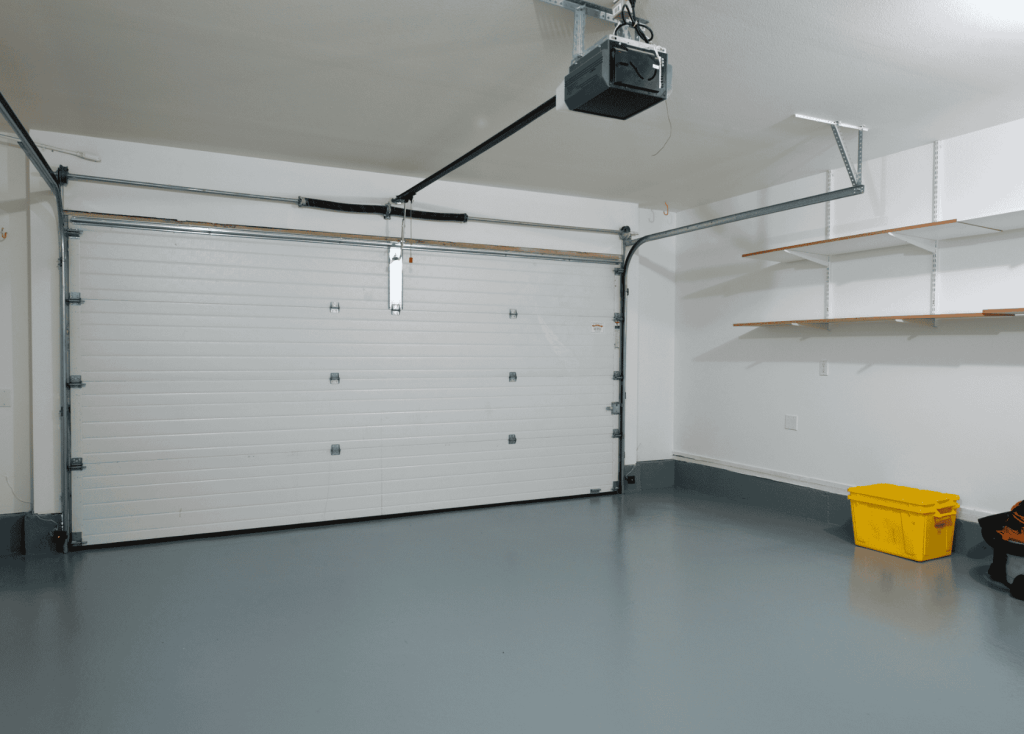
Quick answer: Adding windows, insulation, or reinforcement can increase your garage door’s total weight, which may leave the original springs undersized for the heavier door. Small changes rarely cause problems, but larger modifications can affect balance. Always check the door’s balance after any upgrade rather than assuming the existing springs still fit.
Garage doors are often modified after installation. A homeowner might add insulation for a more comfortable garage, install windows for natural light, or attach reinforcement to strengthen an aging door. Each of these upgrades can genuinely improve the door.
But they can also change something that’s easy to overlook: the total weight of the door.
Garage door springs are chosen to counterbalance a specific weight. When you change the weight of an existing door, the original spring system may no longer provide the same balance it did before. That doesn’t mean every modification calls for new springs. A minor weight change might have little effect, while a bigger one can noticeably change how the door operates.
This post explains how common upgrades affect door weight, why spring balance matters so much, and what to check after modifying your garage door.
Why does adding weight to a garage door matter?
A garage door opener isn’t designed to carry the full weight of the door. Much of that heavy lifting is done by the spring system.
When the springs are properly matched to the door, they counterbalance its weight and let the door move with relatively little effort. The opener simply controls the movement of an already balanced door.
That’s why door weight matters so much. If you add windows, insulation, or reinforcement to an existing door, the springs still provide roughly the same counterbalancing force they did before. The door, however, may now be heavier. Whether that difference is significant depends on how much weight was added and how the original spring system was configured.
Why are garage door springs matched to weight, not just size?
Two garage doors can both measure 16 feet wide by 7 feet high and still need completely different spring configurations.
One might be a lightweight, non-insulated steel door. The other might have insulation, glass, extra steel layers, decorative hardware, and reinforcement. Their dimensions are identical, but their weights can be very different.
This is why choosing springs based only on whether a door is 8×7, 9×7, or 16×7 isn’t enough. The complete weight and configuration of the door need to be considered.
If you want to understand how door weight, spring size, spring type, and expected spring life work together, we explain the full system in our Complete Guide to Garage Door Springs.
Can you add insulation to an existing garage door?
Yes. Many existing garage doors can be retrofitted with insulation.
Garage door insulation kits and individual insulation panels can be installed inside the sections of certain doors. This is an appealing option when the existing door is still in good shape and the homeowner wants better temperature control without replacing the whole door.
However, insulation adds weight. How much depends on the material, the size of the door, and how the insulation is installed. A lightweight retrofit might make only a small difference, while insulating every section of a large door can create a more noticeable increase.
After insulation is added, check the door’s balance. If the door has become noticeably heavier or no longer balances correctly, the existing springs may need to be reevaluated.
Is a factory-insulated garage door better than adding insulation later?
It depends on your situation.
If you already have a good garage door and simply want to improve its insulation, retrofitting insulation can be a practical solution.
The situation is different when you’re buying a new door. If insulation matters from the start, we generally recommend choosing a door that’s manufactured as an insulated model rather than buying a non-insulated door with plans to modify it later.
Factory-insulated garage doors are designed as a complete system. Depending on the model, the insulation may be built between layers of steel or other materials, producing a finished panel designed around that construction from the beginning. The springs can then be selected for the actual finished weight of the new door.
Choose a retrofit if you want to improve an existing door that otherwise doesn’t need replacing. Choose a factory-insulated door if you’re buying new and insulation is a priority.
Can adding windows make a garage door heavier?
Yes, adding windows to an existing door can change its weight.
How much depends heavily on the window system. The glass or glazing material, frames, inserts, and modifications to the existing section all factor in. This is another reason garage door modifications should be evaluated as a complete system.
A homeowner may think of windows as a purely cosmetic upgrade. But from the perspective of the spring system, any meaningful change in the finished weight of the door can affect balance. If windows are being added to an existing door rather than ordered as part of a new factory-built door, check the balance after installation.
Do garage door reinforcement struts add weight?
Yes. Reinforcement struts are commonly installed across garage door sections to add support and reduce unwanted flexing. They’re especially useful on wider doors or when extra structural support is needed.
But steel reinforcement also adds weight. A single strut may not dramatically change how every door operates, but multiple reinforcement components can create a more meaningful difference. This matters most when reinforcement is added after the springs were originally selected.
The purpose of reinforcement is to improve the door, not create a new problem. Whenever significant reinforcement is added, check that the existing spring system still provides proper balance.
Can a garage door still open with springs that no longer match?
Yes, and this is exactly where homeowners tend to miss the problem.
A garage door doesn’t necessarily stop working the moment its balance changes. The opener may keep opening and closing the door, making everything look normal. But the fact that the opener can move the door doesn’t mean the spring system is correctly matched.
If the door has become heavier because of a modification, the opener may be doing more work than before. That’s why evaluating the door itself is more useful than simply asking whether the opener can still open it. If your door has become noticeably harder to lift by hand after an upgrade, it may be time for professional garage door spring repair to rebalance the system.
Can extra garage door weight damage the opener?
An improperly balanced garage door can put unnecessary strain on the opener.
The opener is built to control the movement of a door whose weight is being properly counterbalanced by the springs. It shouldn’t have to compensate for a spring system that’s significantly undersized for the door. Over time, excessive load can contribute to added wear on opener components.
If an opener suddenly sounds different, struggles more than before, moves the door unevenly, or seems to work harder after a modification, inspect the door and spring system rather than simply replacing the opener. Installing a stronger opener does not fix an improperly balanced garage door.
Does a heavier garage door always need stronger springs?
Not necessarily. This is an important distinction, because spring selection is more complicated than just installing a “stronger spring.”
A small change in door weight may still fall within an acceptable operating range for the existing system. A larger change may require a different spring configuration. The correct solution depends on the actual door weight, existing springs, door height, spring system, drums, and other characteristics of the door.
The goal isn’t to install the strongest possible springs. The goal is to have springs that correctly counterbalance your specific door. Springs that aren’t properly matched can create their own balance and operating problems.
Should springs be changed after adding windows, insulation, or reinforcement?
Not automatically. The better approach is to evaluate the garage door after the modification.
If the existing springs continue to balance the door correctly, replacement may not be necessary. If the added weight has noticeably changed the balance, the spring system should be inspected and the right solution determined.
This is especially important after larger modifications: substantial insulation, multiple reinforcement struts, heavier window assemblies, or several upgrades performed on the same door. Instead of guessing based on the type of modification, evaluate the finished door as a complete system. When you’re unsure, a professional in garage door repair Burbank homeowners rely on can measure the door and confirm whether the springs still match.
What should you check after modifying a garage door?
Any modification that meaningfully changes the weight or structure of a garage door is a good reason to check its overall operation.
A thorough inspection should include:
- Door balance – the most direct indicator of whether the springs still match
- Spring system – checked against the finished door weight
- Cables, rollers, and tracks – for wear or added resistance
- Reinforcement – to confirm it’s secure and properly installed
- Opener operation – for signs of extra strain
It’s also worth checking whether the modification changed how smoothly the sections travel through the track. The goal is simple: the door should stay properly balanced and move smoothly after the upgrade.
Should you upgrade your existing garage door or replace it?
That depends on the condition of the existing door and what you’re trying to accomplish.
Choose to modify the existing door if it’s structurally sound and you simply want better insulation, added reinforcement, or another relatively minor improvement.
Choose to replace the door if it’s already old, damaged, poorly insulated, or in need of several major upgrades at once. If you want insulation, windows, new hardware, and significant reinforcement all at the same time, it’s worth comparing the cost of those modifications against a new door designed with those features from the factory.
Most importantly, whether you modify an existing door or install a new one, the spring system should be properly matched to the final weight and configuration of the garage door.
Windows, insulation, and reinforcement can all be excellent upgrades. They simply shouldn’t be treated as separate from the system that lifts and balances the door.