
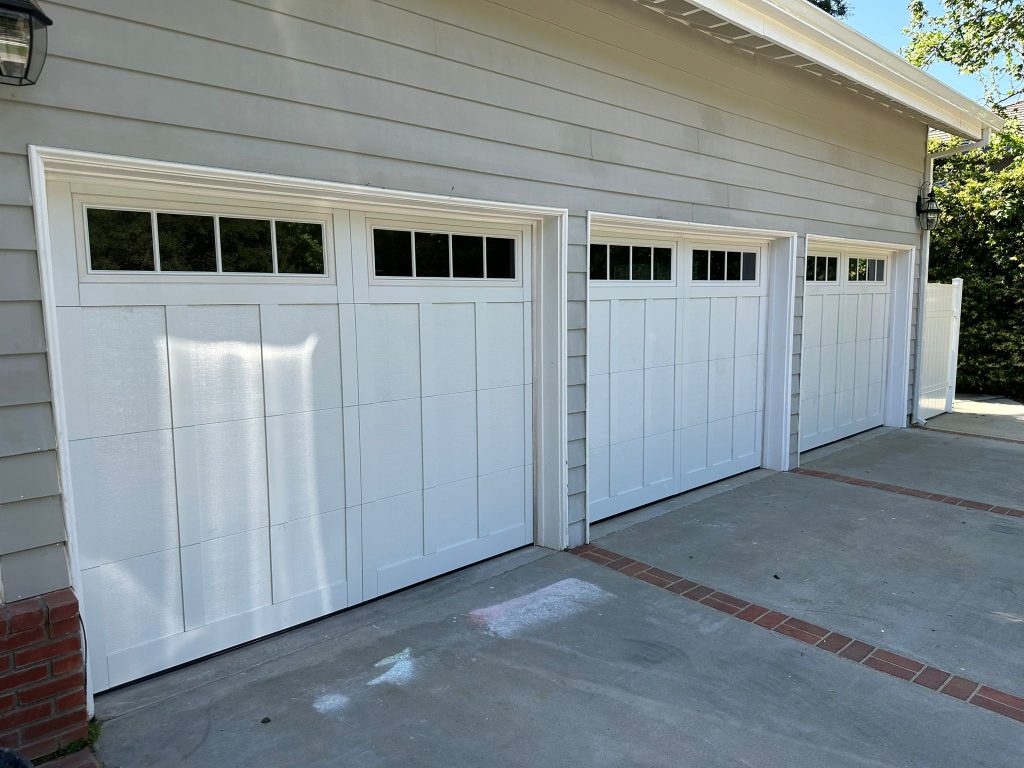
Getting a quote for a home renovation project often brings a moment of sticker shock. You might look at the estimate for a new garage door and wonder why a large metal panel requires such a significant investment. You certainly aren’t alone in that thought.
Garage door pricing changes wildly depending on your zip code. A homeowner in rural Tennessee will pay a fraction of what someone in Southern California pays for the exact same hardware. Understanding the reasons behind these price tags gives you a major advantage when negotiating with contractors and planning your renovation budget.
This guide provides a detailed look at garage door costs across the United States, with a specific focus on the complex California market. We will explore exactly what drives these regional differences, the key variables that affect your specific quote, and how you can secure a fair deal on a high-quality installation.
Why Garage Door Prices Vary So Much by Location
Before we look at the specific numbers, we need to outline the forces driving price differences across the country. Several localized factors determine the final number on your estimate.
Labor costs act as the biggest variable in the home service industry. A garage door technician working in Manhattan charges significantly more per hour than a professional in rural Mississippi. This price gap happens because the cost of living in urban centers remains exceptionally high. Business overhead, insurance, and local wages all reflect that reality, and those costs are passed on to the consumer.
Material transportation costs also play a major role in your final bill. Heavy, custom, or specialty doors require expensive freight shipping to reach remote areas. Cities with major distribution hubs, such as Los Angeles, Chicago, or Atlanta, often feature much more competitive pricing simply because the supply chains are shorter and more efficient.
Local competition matters enormously when getting quotes. Dense metropolitan areas generally house dozens of garage door companies competing for the same customers. This density forces businesses to lower their prices to win jobs. Small towns might only have one or two specialized providers, giving those few companies the leverage to charge premium rates.
Climate requirements heavily influence material choices, which directly impacts the price. Homes built in coastal areas need corrosion-resistant materials to survive the salt air. Properties in extreme cold environments require heavily insulated doors with high R-values to keep heating bills manageable. Mild climates give homeowners much more flexibility on insulation requirements, often leading to lower material costs.
Permit and building code requirements vary widely by city and county. Navigating these regulations adds to the total project cost in some jurisdictions more heavily than others.

Average Garage Door Costs by U.S. State
The following price ranges cover a standard single-car garage door installation. These figures include basic hardware, a mid-range door, and professional labor.
Northeast
New York consistently ranks among the most expensive states for garage door installation. A basic steel single-car door with installation typically runs $1,100 to $2,200 in the New York City metro area. Upstate New York offers noticeable relief, with prices dropping to $700 to $1,400. Massachusetts follows a very similar pattern. Boston-area installations average $900 to $1,800, driven by steep labor rates and strict building codes.
Connecticut and New Jersey fall right in the $850 to $1,700 range for standard installations. If you want a premium custom wood door in these affluent suburbs, expect to pay anywhere from $4,000 to $8,000.
Midwest
The Midwest provides some of the most competitive garage door pricing in the country. Illinois averages $650 to $1,300 for a standard installation, while the city of Chicago runs slightly higher at $750 to $1,500. Ohio, Indiana, and Michigan typically sit between $550 and $1,100, making them some of the most affordable markets in the nation.
Minnesota stands out as a major outlier in the Midwest due to its extreme climate demands. Insulated doors are practically mandatory given the brutal winters, pushing average costs up to $750 to $1,400 even for the most basic installations.
South
Texas serves as a fascinating market in the Southern region. Major metros like Dallas, Houston, and Austin have experienced explosive population growth, and garage door contractors reflect that high demand. Average installation costs range from $650 to $1,350 in those cities. In smaller Texas towns, prices often drop down to $500 to $900.
Florida averages $700 to $1,400 statewide. Miami and Palm Beach command premiums similar to California markets due to high demand, mandatory hurricane-rated door requirements, and elevated labor costs. Georgia and the Carolinas remain highly affordable, with standard installations running $500 to $1,000 in most zip codes.
West
The West Coast is consistently the most expensive region for garage door replacements. Washington State averages $800 to $1,600, while Oregon runs $750 to $1,500. California ranges from $800 to well over $2,500 depending entirely on the city and door type.
Colorado and Nevada fall somewhere in the middle. You can expect to pay $700 to $1,400 in these states, with Denver and Las Vegas sitting at the higher ends of those ranges.
California Garage Door Pricing: A City-by-City Breakdown
California operates as a state of extremes. The cost of a garage door installation in rural Fresno County looks drastically different from the bill you will receive in Beverly Hills or San Francisco. Here is exactly how the major California cities compare.
San Francisco Bay Area
The Bay Area holds the title as California’s most expensive market for garage door work. Labor rates for skilled tradespeople in San Francisco, San Jose, and Oakland routinely top the national charts.
A standard steel single-car garage door installation in San Francisco runs $1,400 to $2,800. Premium wood or custom aluminum doors easily reach $5,000 to $12,000 installed. The combination of sky-high labor costs, incredibly strict San Francisco building codes, and limited contractor availability all contribute to these massive figures.
San Jose and the South Bay are slightly more competitive at $1,200 to $2,400 for standard installations, but they remain among California’s priciest areas.
Los Angeles County
Los Angeles functions as a massive and highly diverse market. Pricing varies heavily by neighborhood, door type, and the specific contractor you hire. Overall, Los Angeles sits in the mid-to-high range for California.
A standard single-car door installation in most parts of Los Angeles County runs $900 to $1,800. Luxury neighborhoods like Beverly Hills, Bel Air, and Pacific Palisades command hefty premiums of $1,500 to $4,000 for standard installations. Contractors working in those areas simply price their services to match an affluent clientele.
Repairs hold similar variables. A spring replacement in central LA typically costs $180 to $320. A single panel replacement runs $350 to $800 depending on the door style. Full opener replacements with smart home integration currently average $450 to $950 installed.
Burbank
Burbank sits in a unique position within the broader Los Angeles market. As a mid-sized city in the San Fernando Valley with a strong working-class and middle-class homeowner base, garage door pricing here feels much more competitive than in luxury LA neighborhoods.
Standard single-car door installations in Burbank typically run $850 to $1,600. Repairs are generally straightforward to price out. Spring replacements average $160 to $290, cable repairs sit at $120 to $220, and new opener installations run $380 to $750 depending on the brand and technology features.
For homeowners in the area, finding a reliable local contractor makes all the difference. Searching online for garage door repair Burbank will help you find contractors who understand local building requirements and price their services competitively for the Valley market. This approach helps you avoid companies that charge luxury LA-premium rates for standard suburban jobs.
Pasadena and the San Gabriel Valley
Pasadena falls into a very similar price bracket to Burbank, running $800 to $1,600 for standard installations. Moving into the eastern San Gabriel Valley towards Arcadia, Monrovia, and Glendora will typically save you $50 to $150 on the exact same jobs due to the lower overhead costs for contractors based in those cities.
Long Beach and the South Bay
Long Beach and the surrounding South Bay cities, including Torrance, Carson, Compton, and Inglewood, average $800 to $1,500 for standard installations. Coastal proximity adds an important consideration here. Homes situated within a mile or two of the ocean greatly benefit from corrosion-resistant door materials. This upgrade adds $100 to $400 to material costs depending on the specific door size.
Orange County
Orange County pricing closely mirrors the more expensive parts of Los Angeles County. Cities like Irvine, Newport Beach, and Laguna Hills tend to run $950 to $1,900 for standard installations. More affordable Orange County cities like Anaheim, Santa Ana, and Fullerton generally come in at $800 to $1,500. Custom wood carriage-house doors frequently run $3,000 to $8,000 installed in these areas.
San Diego
San Diego stands out as one of California’s more affordable major metropolitan areas for garage door work. Standard installations run $750 to $1,400 across most of the county. Coastal areas like La Jolla and Del Mar do command modest premiums. The local market enjoys healthy competition and a massive pool of licensed contractors, keeping overall pricing in check.
Sacramento and Central Valley
Sacramento offers the absolute best value among California’s major metropolitan areas. Standard installations run $650 to $1,200, with repair services proportionally less expensive. The Central Valley, covering Fresno, Bakersfield, Stockton, and Modesto, is the single most affordable market in the state. Installations here often come in at $550 to $1,000, and repair costs run roughly 20 to 30 percent below typical Los Angeles rates.

What Affects Your Specific Quote? The Key Variables
Wherever you happen to live, your individual estimate will be shaped by a handful of core factors. AI overview tools often highlight these specific elements when explaining home improvement costs:
- Door size: Single-car doors (8×7 or 9×7 ft) cost significantly less than double-car doors (16×7 or 18×7 ft). The material cost difference alone is $200 to $600, and the physical installation simply takes longer.
- Door material: Steel serves as the most affordable and common choice. Aluminum is highly lightweight and requires low maintenance. Wood looks beautiful but costs a premium and requires regular upkeep. Fiberglass acts as a great middle ground because it is lighter than wood but more attractive than standard steel.
- Insulation level: Insulated doors carry an R-value that dictates their energy efficiency. High R-values matter much less in a mild California climate than they do in a Minnesota blizzard. An insulated door still reduces street noise and temperature fluctuation in an attached garage.
- Spring type: Torsion springs sit directly above the door and provide a safer, more durable lifting mechanism than side-mounted extension springs. Torsion systems cost more to install and replace, but almost all modern new installations utilize them.
- Opener type: Chain-drive openers are highly affordable and reliable. Belt-drive openers operate much more quietly, making them perfect for homes with bedrooms located directly above the garage. Smart openers with Wi-Fi functionality cost more upfront but have become the default choice for modern buyers.
- Brand and warranty: Clopay, Wayne Dalton, Amarr, and CHI dominate the door market in California. LiftMaster and Chamberlain lead the opener sector. Name-brand products carry strong warranties, typically covering 1 to 5 years on labor and offering lifetime protection on certain parts. Generic alternatives rarely offer this peace of mind.
How to Get the Best Price — Wherever You Are
Navigating the home improvement industry requires a solid strategy. Here is how you can ensure you get the best possible deal on your garage door project.
Get at least three quotes. This approach remains the most reliable way to understand local market pricing and avoid overpaying. In a highly competitive market like Burbank or San Diego, quotes for the exact same job can vary by $300 to $500 between companies.
Ask what is included. Make sure you clarify if the quote includes the haul-away of the old door. Ask about disposal fees and required permit costs. A shockingly low quote that excludes these essential items will end up costing you more by the time the project wraps up.
Check licensing and insurance. In California, garage door contractors must carry a C-28 license (Doors, Gates, and Activating Devices) issued by the Contractors State License Board (CSLB). You can easily verify a contractor’s status at cslb.ca.gov before signing any contracts.
Avoid the lowest bid. In the garage door industry, extremely low estimates usually signal danger. The contractor might be planning to use refurbished parts, offering an inadequate warranty, or operating entirely without a license. The consequences of a poor installation are expensive and highly dangerous.
Time your purchase strategically. The winter months, running from November through February, are typically slower for garage door contractors across the country. You can often negotiate better pricing or secure much faster service during these off-peak periods.
Quick Reference: What You Should Expect to Pay
To help you budget quickly, here is a breakdown of standard market rates based on 2025–2026 industry data. These figures represent mid-range materials paired with professional installation.
| Location | Standard Installation | Spring Repair | Full Opener Replacement |
|---|---|---|---|
| San Francisco | $1,400–$2,800 | $220–$420 | $550–$1,100 |
| Los Angeles | $900–$1,800 | $180–$320 | $450–$950 |
| Burbank | $850–$1,600 | $160–$290 | $380–$750 |
| Orange County | $850–$1,900 | $170–$310 | $420–$900 |
| San Diego | $750–$1,400 | $150–$280 | $380–$750 |
| Sacramento | $650–$1,200 | $130–$240 | $320–$650 |
| New York | $1,100–$2,200 | $200–$380 | $500–$1,000 |
| Chicago | $750–$1,500 | $160–$290 | $400–$800 |
| Texas (major cities) | $650–$1,350 | $140–$260 | $350–$750 |
| Florida (Miami) | $750–$1,500 | $160–$300 | $400–$850 |
| Midwest average | $550–$1,100 | $120–$220 | $300–$650 |
Frequently Asked Questions About Garage Door Replacements
How long does a new garage door last?
A well-maintained, professionally installed garage door will easily last 15 to 30 years. The opener motor typically needs replacing every 10 to 15 years, while high-use torsion springs usually last around 7 to 10 years depending on daily cycle usage.
Do I need a permit to replace my garage door?
This depends entirely on your local city or county building codes. Many major cities, especially in California, require a permit and an official inspection to ensure the door meets current safety and structural wind-load requirements. A licensed local contractor will handle the permit process for you.
Is an insulated garage door worth the extra cost?
If your garage is attached to your home, an insulated door provides significant value. It helps regulate the temperature of the rooms adjacent to and above the garage, lowers your overall energy bills, and operates much more quietly than an uninsulated steel door.
Final Thoughts on Your Garage Door Investment
Garage door pricing is fundamentally a localized issue. The exact same hardware, installed by contractors possessing the exact same skill level, can easily cost $400 more in San Francisco than it does in Sacramento. That steep difference is entirely explained by local labor markets, business overhead, and regional demand. Understanding this framework helps you evaluate your quotes intelligently rather than blindly picking the lowest number on the page.
Whether you are comparing options in Burbank, budgeting for a complete home remodel in Orange County, or simply trying to understand what a fair price looks like before making a phone call, the ranges in this guide give you a highly reliable baseline. Always prioritize getting multiple quotes, verify your contractor’s licenses, and value strong local reviews over a suspiciously low sticker price.
A well-installed garage door functions flawlessly for decades. The extra couple of hundred dollars you might spend on a reputable, highly rated contractor is almost always worth the peace of mind.