
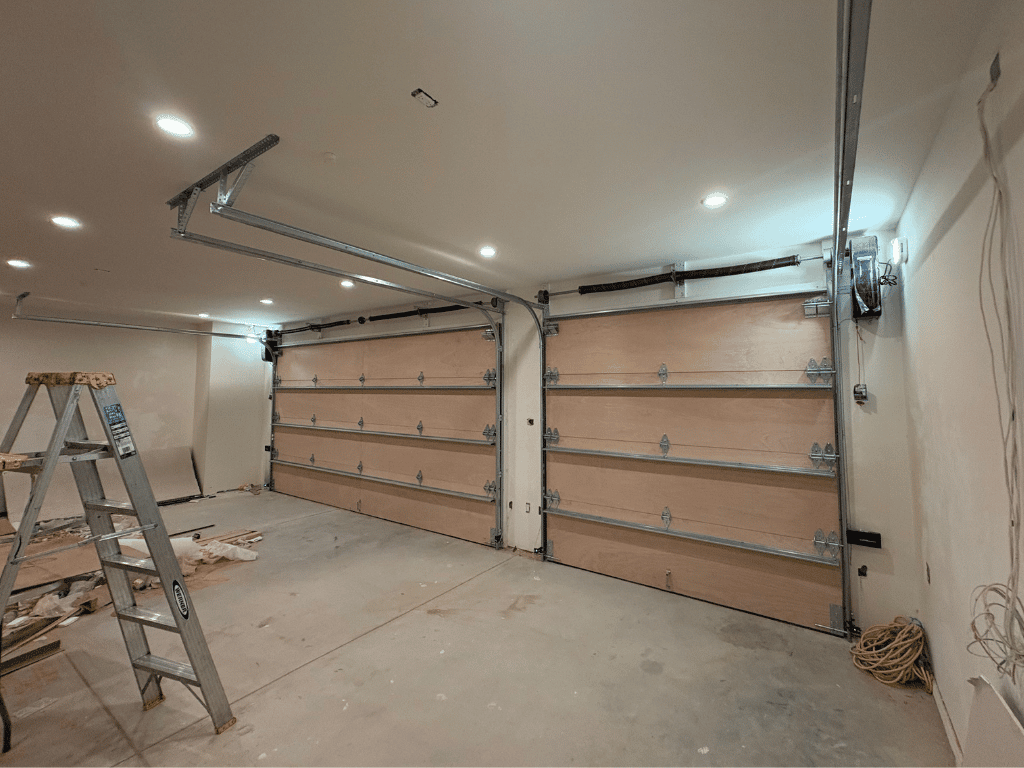
Quick answer: Most garage door failures fall into six common categories-broken springs, off-track doors, snapped cables, opener problems, misaligned sensors, and worn rollers. Sensor cleaning and battery swaps are safe to DIY, but anything involving springs or cables needs a professional. Always verify a contractor’s CSLB license before work begins.
A garage door never breaks at a good time. It’s 7:40 AM, your car is trapped inside, and you’re already running late. We get it-we hear it every day from homeowners across Burbank.
Here’s the reassuring part: garage doors don’t fail in mysterious ways. After years of repairing doors in Burbank, Glendale, and North Hollywood, we can tell you that nearly every problem fits into a handful of well-understood categories. Knowing which one you’re dealing with tells you a lot-how urgent it is, roughly what it’ll cost, and whether it’s safe to wait until morning.
This guide breaks down the most common problems we see, what you can safely handle yourself, and how to avoid the bait-and-switch operators that give our industry a bad name.
The 6 Most Common Garage Door Problems We See
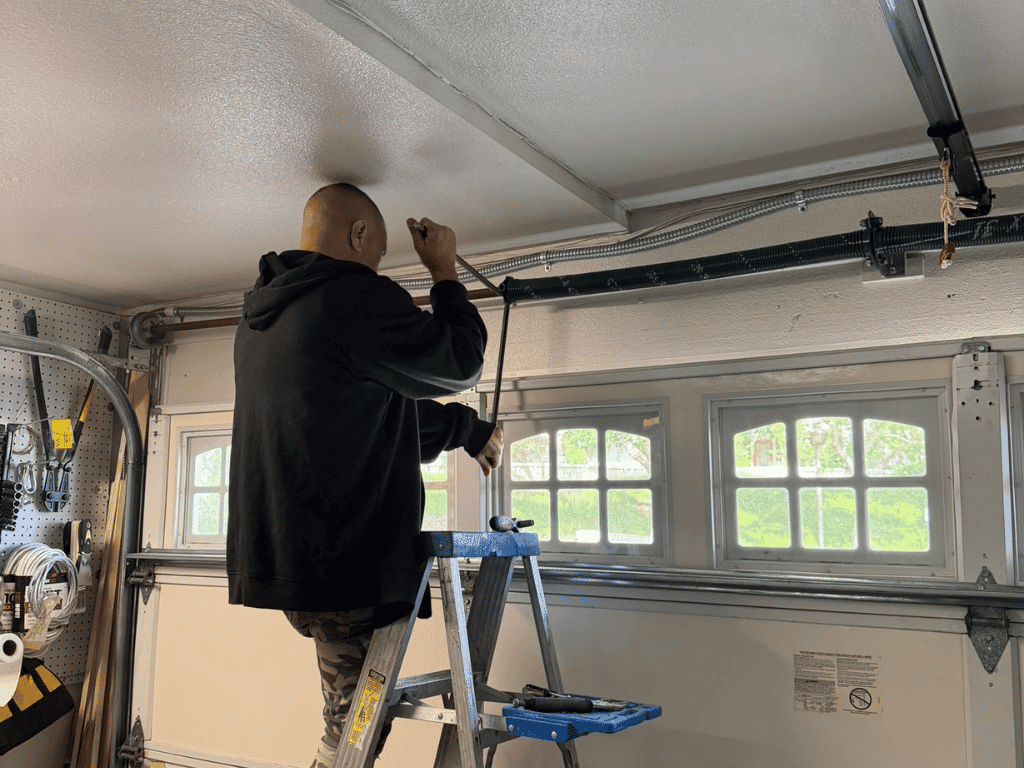
1. Broken torsion spring
This is the big one-the most frequent major failure by far. Springs are rated for cycles, usually around 10,000 open-and-close cycles. For an average household, that translates to about 7 to 10 years of life.
When a spring breaks, you’ll often hear a loud bang from the garage. Afterward, the door will feel extremely heavy, or the opener will strain and fail to lift it.
Don’t keep running the opener, and don’t try to lift the door by hand. A door without spring support can weigh between 150 and 300 pounds. This is a same-day professional repair. And here’s an honest tip: if one spring broke, replace both. The second spring has the same mileage and usually fails right behind the first.
For most standard residential garage doors, replacing both torsion springs costs between $150 and $350, including parts and professional labor. The final price depends primarily on the weight of your door: heavier doors – such as solid wood, custom aluminum, or insulated models – require stronger, higher-cycle springs and typically run between $450 and $750.
2. Door off its tracks
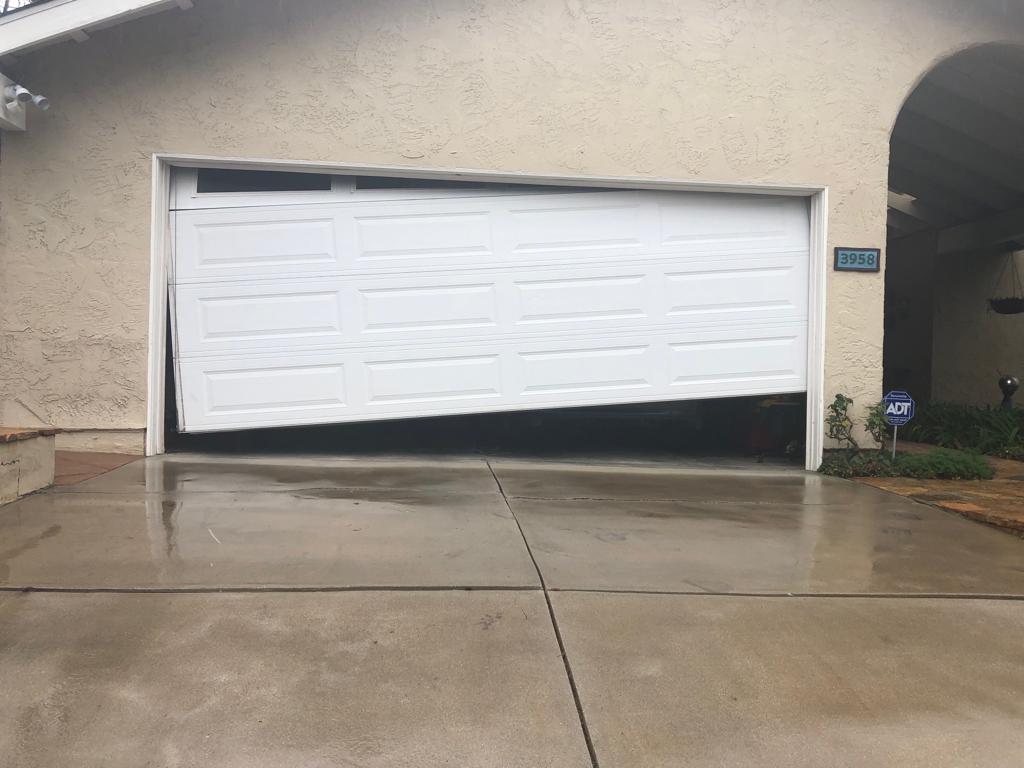
A door comes off its tracks for a few reasons-a broken cable, an obstruction in the path, or a bump from a vehicle. Whatever the cause, an off-track door can fall.
Stop using it immediately. Keep kids and pets well clear until a technician repairs it.
Putting a garage door back on track typically costs between $250 and $500, depending on the condition of the door. This price applies when the door itself is undamaged – the technician realigns the door, secures the rollers in the tracks, and tests the full travel and balance before leaving.
3. Frayed or snapped cables
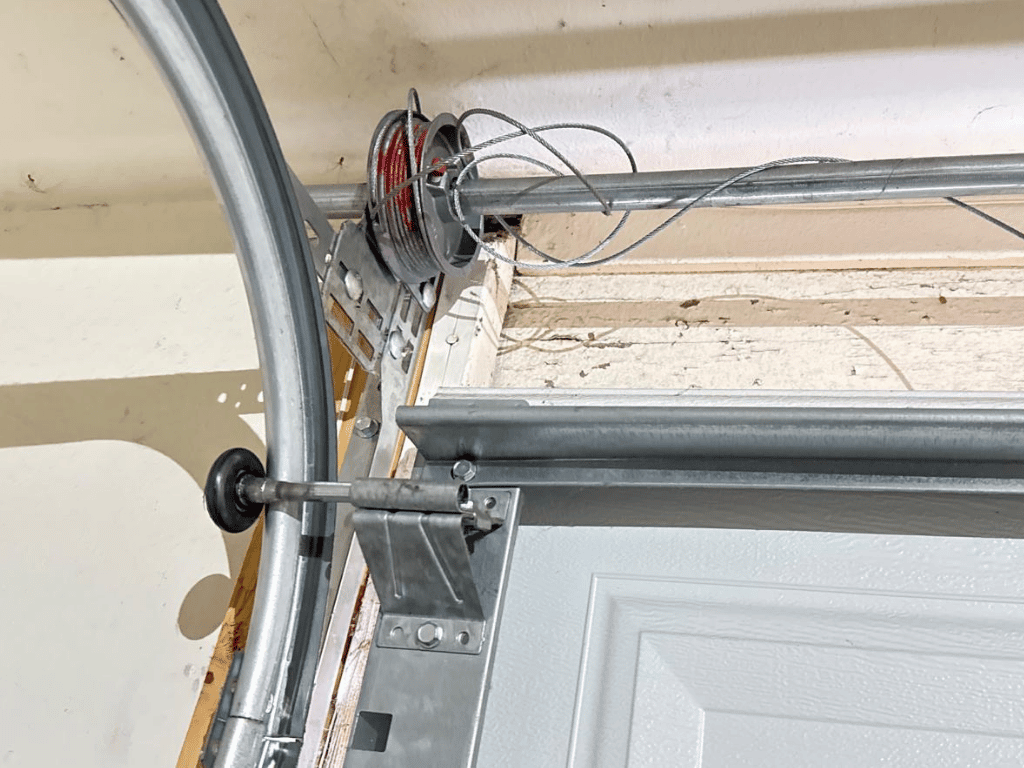
Cables work alongside the springs to lift the door evenly. When a cable fails, the door often hangs crooked or jerks hard on one side as it moves.
Like springs, cables are under serious tension. This is not a DIY repair, no matter how handy you are.
Garage door cable replacement typically costs between $120 and $250, including parts and professional labor. We always replace both cables as a pair — they carry the door’s weight together and wear at the same rate, so replacing only the broken one usually leads to a second failure within months. The exact price is confirmed on-site after the technician inspects the cables, drums, and door balance, and before any work begins.
4. Opener failure
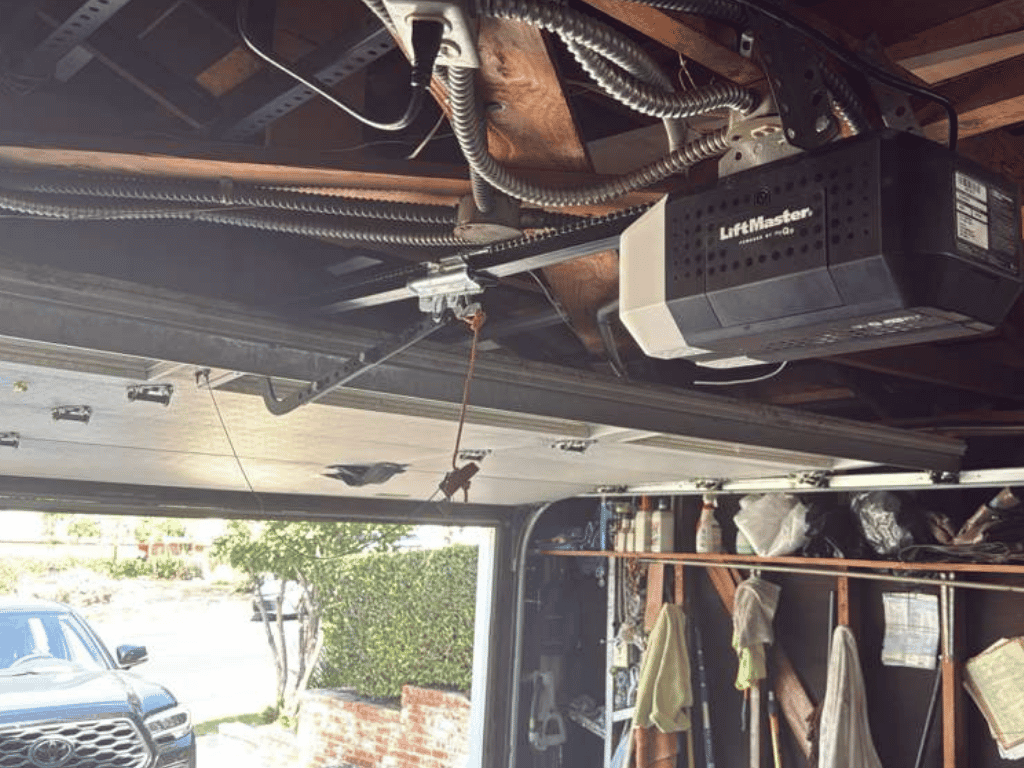
Before assuming the worst, run a quick check. Start with the basics: try a second remote or the wall-mounted push button – often the problem is simply a dead remote battery, not the opener itself. Next, disconnect the opener from the door using the emergency release handle (the red handle hanging from the trolley cord) and try running the opener again. If the motor doesn’t respond even with the door disconnected, the issue is in the opener itself – typically the motor, gear, or logic board – and it’s time to call a technician. Keep in mind that if your opener is 15 years old or more, a full replacement is often the smarter investment than repairing it, especially since California law now requires battery backup on all newly installed openers – a safety feature older units simply don’t have.
At D-One, garage door opener repairs typically cost between $120 and $250, including parts and labor. This range covers the most common opener issues we see — stripped gears, circuit board failures, travel and force adjustments, and safety sensor problems.
5. Misaligned safety sensors
Does your door start to close, then reverse back up? Nine times out of ten, the culprit is the photo-eye sensors near the floor. They get blocked, dirty, or knocked out of alignment.
Good news: this is the one repair homeowners can safely tackle. Check for anything blocking the beam, wipe both lenses clean, and make sure both sensor lights glow steady rather than blinking.
6. Worn rollers and hinges
Grinding, squealing, or a shaky, rattling door? That usually points to worn-out rollers. Swapping in nylon rollers is an inexpensive fix that makes a dramatic difference in noise-a real win for our Burbank customers who have bedrooms sitting right above the garage.
What’s Safe to DIY-And What Isn’t
Some garage door tasks are perfectly fine for a confident homeowner. Others can put you in the emergency room. Here’s the honest line.
Safe for homeowners:
- Cleaning and realigning safety sensors
- Replacing remote and keypad batteries
- Tightening visibly loose hinge bolts on a closed door
- Lubricating hinges and rollers with proper garage-door lubricant
- Replacing worn weather stripping
Leave to the professionals:
- Anything involving springs
- Cable repairs or replacement
- Bottom brackets
- Track repositioning
These components hold hundreds of pounds of tension. Emergency rooms treat thousands of garage-door injuries every year, and spring and cable accidents rank among the worst. No repair bill costs more than a serious hand injury.
How to Avoid Being Overcharged
The garage door industry has a reputation problem, and it’s earned by a small group of bad actors. You’ve probably seen the ads: a “$29 service call” that somehow turns into a $1,200 rebuild once the technician is in your garage. Here’s how to protect yourself.
Verify the license. California requires a CSLB contractor license for any job over $1,000. You can check any company for free at cslb.ca.gov. The CSLB licenses roughly 285,000 contractors statewide and lets you confirm a license in seconds. (For the record, our license is #1050878.)
Get the diagnosis and price in writing first. A legitimate technician explains what failed, shows you the broken part, and quotes the full price-parts, labor, and any service fee-before picking up a wrench. No surprises after the fact.
Be skeptical of “everything must be replaced.” A broken spring does not automatically mean you need new cables, rollers, drums, and an opener too. Every recommendation should come with a reason you can actually see for yourself.
Local matters. A company with a genuine local presence-and reviews from neighbors in Burbank, Glendale, and North Hollywood—has a reputation to protect. That accountability works in your favor.
When to Call a Pro vs. Wait Until Morning
Not every problem is an emergency. Use this quick rule of thumb:
Call for same-day service if you heard a loud bang, the door is off its tracks, it hangs crooked, or it feels impossibly heavy. These point to spring or cable failures that are unsafe to leave alone.
It can usually wait if the issue is a noisy door, a dead remote battery, or a sensor that needs cleaning. Choose same-day help if the door being stuck disrupts your day; otherwise, these fixes hold fine for a day or two.
The Bottom Line on Burbank Garage Door Repair
Most garage door failures come down to six familiar problems, and the right response depends entirely on which one you’re facing. Sensors and batteries are fair game for a DIY fix. Springs, cables, and tracks are not-the tension involved is simply too dangerous.
When you do call for help, protect yourself: verify the license at cslb.ca.gov, insist on a written quote, and steer clear of anyone pushing a full rebuild without showing you why.
If your door is down and you’re not sure how serious it is, reach out for a straight answer and same-day service. A quick, honest diagnosis beats guessing every time.
Frequently Asked Questions
My garage door won’t open and my car is stuck inside. What do I do?
If the door is intact and still on its tracks, pull the red emergency release cord on the opener rail and lift the door by hand-but only if the springs are not broken. The door should lift with reasonable effort and stay open on its own. If it’s extremely heavy, crooked, or you heard a loud bang earlier, don’t force it. Call for same-day service instead.
How fast can a garage door repair be done?
Most common repairs-springs, cables, rollers, sensors, and opener issues-are finished in a single visit, usually within 1 to 2 hours. That’s because service trucks carry standard parts for the door brands common in the Burbank area.
Why does my garage door reverse before it closes?
Almost always the safety sensors. They’re blocked, dirty, or knocked out of alignment. Clean both lenses and realign them so the lights stay steady. If that doesn’t fix it, the opener’s travel or force limits may need a professional adjustment.
Is a noisy garage door dangerous?
The noise itself isn’t dangerous, but it’s your door telling you something is wearing out. A grinding or popping door caught early is usually a cheap fix. Ignore it, and it can become a snapped spring or an off-track emergency down the line.
How long do garage door springs last?
Most torsion springs are rated for about 10,000 cycles, which works out to roughly 7 to 10 years for an average household. Homes that use the garage as a main entrance go through cycles faster, so their springs tend to wear out sooner.