
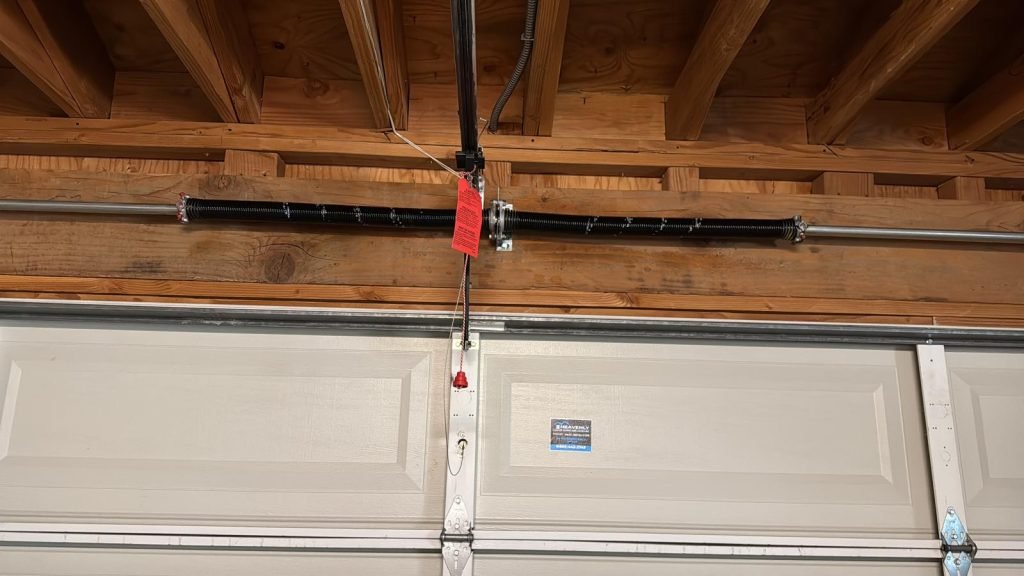
Quick answer: A snapped garage door spring is the most common repair call in Burbank, California. The spring, rather than the electric motor, lifts the heavy garage door using stored torsional energy. Fixing a broken spring requires matching the exact wire diameter, length, and inside diameter to the specific weight of the door.
A snapped garage door spring is the single most common repair issue for homeowners in Burbank, California. When the spring breaks, the door stops working entirely. The entire mechanical balance of the system collapses in an instant.
Many people assume the garage door spring is just a simple metal coil. In reality, a garage door spring is a precisely engineered torsion device calibrated to the exact weight of a specific door. The electric motor does not lift the door. The motor merely guides a balanced door along the tracks.
This guide explains the engineering behind garage door springs. You will learn why sizing matters, how to match the right spring to your door, and which manufacturers produce reliable products. We will also explore how the specific climate in Burbank shortens the life of your springs, and what you can do about it.
How do garage door spring systems actually work?
Garage doors weigh between 130 and 400 pounds. No standard electric opener motor is strong enough to lift that weight directly. The springs do the actual lifting using stored mechanical energy.
When the garage door is closed, the spring winds under tension. The spring stores potential energy like a tightly compressed battery. When the door opens, the spring releases that energy to counterbalance the weight of the door. The opener motor only needs to overcome basic friction and guide the movement.
When you disconnect the opener and lift a properly balanced door by hand, the door should feel almost weightless. If the door feels heavy, the spring tension is too low. Perfect calibration means the spring energy exactly matches the door weight throughout the full range of motion.
Why do modern homes use torsion springs instead of extension springs?
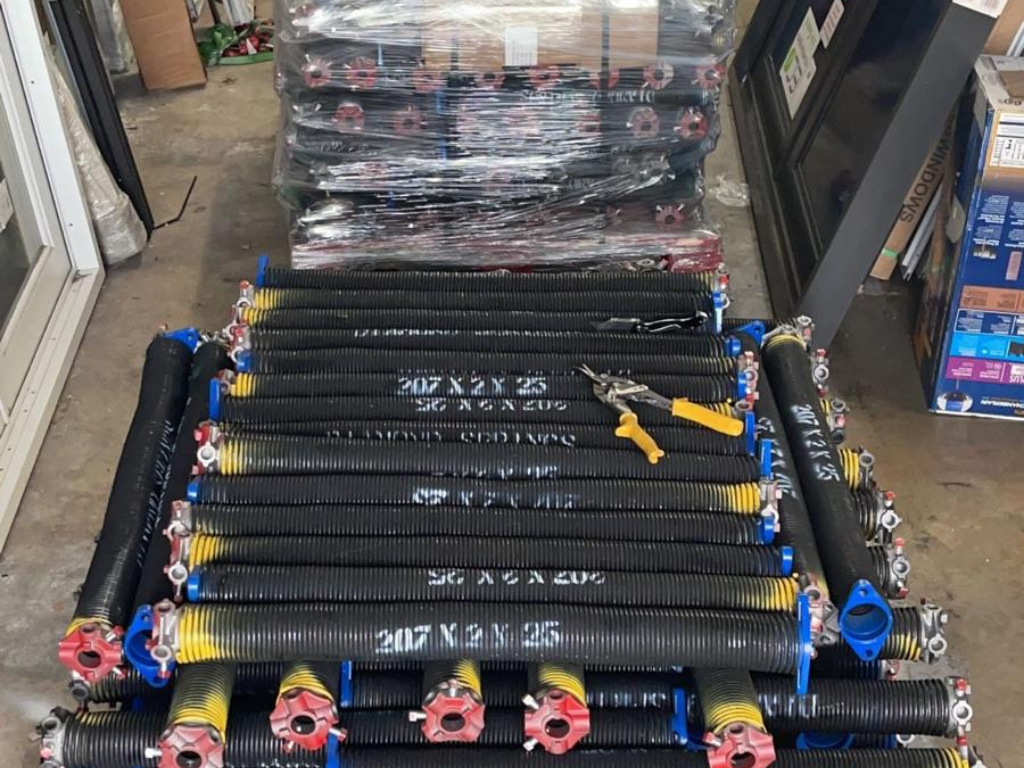
Modern residential and commercial doors in Burbank almost universally use torsion systems due to their precision, safety, and longevity. Torsion springs mount on a steel shaft directly above the door opening. When the door closes, cables wind around drums at each end of the shaft. This action twists the spring coils tighter. The stored torque in the coil releases as the door opens.
Extension springs are older and less common. Installers mount extension springs on the horizontal tracks above the door. Extension springs stretch when the door closes and contract when it opens. Extension springs cost less but present severe danger when they break. A snapped extension spring becomes a dangerous projectile inside the garage.
Why do garage door springs come in different sizes?
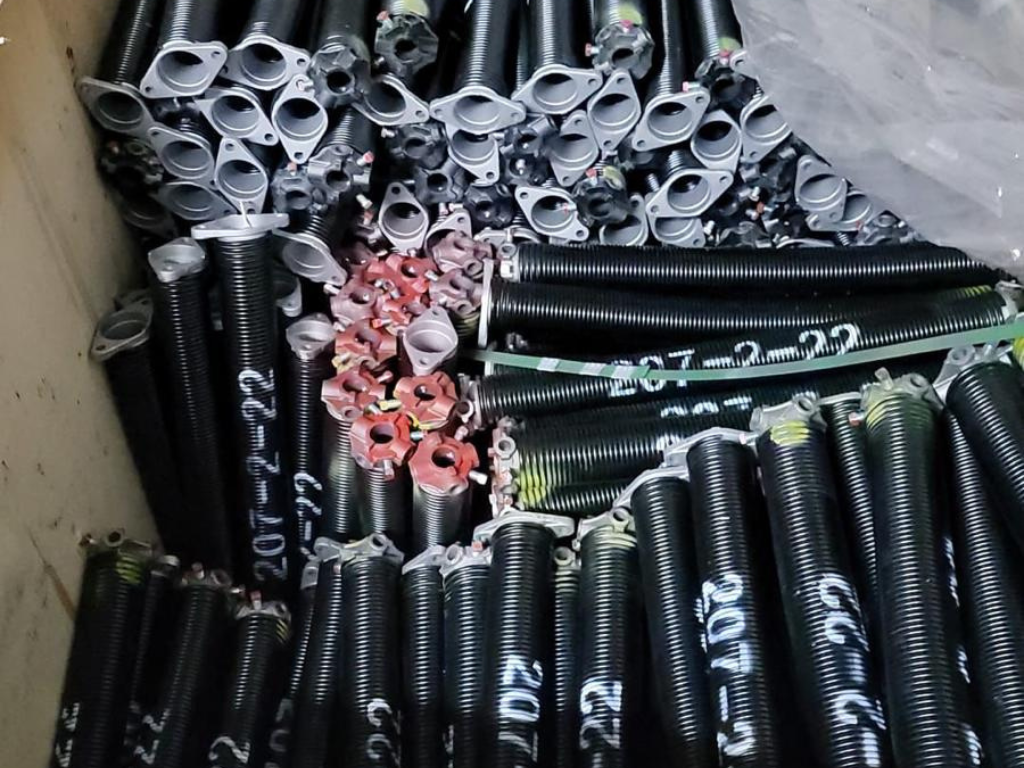
Walk into a hardware store, and you will find dozens of garage door springs that look identical. Each dimension in a spring specification corresponds to a specific mechanical property. Substituting the wrong size creates a system that is dangerously over-tensioned or too weak to lift the door.
What does the wire diameter of a spring indicate?
Wire diameter is the thickness of the steel wire used to wind the coil. Manufacturers measure wire diameter in fractions of an inch, such as 0.225″ or 0.250″. Wire diameter determines the spring strength. A thicker wire stores more energy per unit of tension and has a longer fatigue life. For example, a 0.250″ wire spring carries roughly 30% more torque capacity than a 0.225″ wire spring.
How do inside diameter and overall length affect spring performance?
The inside diameter is the width of the hollow center of the spring coil. In residential applications, the standard inside diameter is 1.75 inches for standard residential torsion shafts. The inside diameter must match the shaft diameter perfectly.
The overall length is the total length of the spring coil from end to end when at rest. Longer springs store more energy for the same wire diameter. Standard residential springs typically range from 24 inches to 36 inches in length.
How can you match the correct spring to your garage door?
Finding the correct spring is a strict calculation. The goal is to find a spring that produces the exact torque output to balance the door’s weight.
Professional installers use the calculation method. First, the technician weighs the door using a bathroom scale under each corner. A standard 16×7 double steel door weighs between 160 and 220 pounds. Next, the technician calculates the required torque. The formula multiplies the door weight by the drum radius. A 200-pound door using a standard 4-inch radius drum requires 800 inch-pounds of torque. Finally, the technician selects a spring that matches this required torque output.
Most field technicians also use the direct substitution method. The technician measures the broken spring’s wire diameter, inside diameter, and length to order an exact replacement. This method works perfectly as long as the original installer used the correct spring size.
Who are the best manufacturers of garage door springs?
The garage door spring market features a clear quality hierarchy. At the top sit US and Canadian manufacturers. Below them are import springs sold through online retailers.
Which brands make industry-standard garage door springs?
Tier 1 manufacturers include Ideal Door, Clopay, Wayne Dalton, Amarr, and Raynor. These companies produce springs that meet strict industry standards. Regional distributors serving Southern California installers widely use Ideal Door and Clopay springs. Wayne Dalton manufactures a proprietary TorqueMaster system with springs enclosed inside a steel tube for extra safety.
Should you buy cheap import springs online?
You should avoid no-brand import springs sold on discount websites. These springs may advertise a 10,000-cycle rating, but the industry does not independently verify these claims. The wire diameter tolerances are often wider than domestic standards. A spring labeled 0.250″ might actually measure 0.240″. This variance negatively affects torque output and cycle life.
How does the Burbank climate affect the lifespan of a garage door spring?
Springs in Burbank, California fail at different rates than springs in more temperate climates. The San Fernando Valley experiences extreme daily temperature swings. Temperatures drop to 55°F at night and spike to 110°F on summer afternoons.
Each temperature cycle causes microscopic expansion and contraction of the steel wire. Over thousands of cycles, thermal stress accelerates metal fatigue. A standard 10,000-cycle spring degrades much faster under these conditions. Homeowners in Burbank should always upgrade to a 25,000-cycle high-cycle spring. This upgrade typically costs an additional $30 to $60 per spring but doubles the service life.
Additionally, dust from construction and Santa Ana winds settles on the spring coils. Dust combines with lubricant to form an abrasive compound. Burbank homeowners should apply a light coat of purpose-formulated silicone garage door lubricant to the spring coils every six months to prevent excessive grinding and wear.
What are the safety risks of replacing a garage door spring yourself?
Replacing a torsion spring is not a safe do-it-yourself project. A torsion spring under full tension stores between 300 and 500 foot-pounds of energy. When a spring snaps, that energy releases instantly.
The winding process requires specialized winding bars and precise control. If a makeshift tool slips during the process, the spring unwinds violently. A winding bar ejected at this energy level can penetrate drywall or shatter bone.
Homeowners can safely perform visual inspections, operate the emergency manual release cord, and lubricate intact springs. Any winding of spring tension, cable replacement, or conversion from extension to torsion systems requires a trained professional.
Next Steps for Your Garage Door Repair
Understanding how your garage door spring functions helps you make informed choices when the system inevitably fails. Remember that the spring does the heavy lifting, size specifications must be exact, and the Burbank heat requires durable, high-cycle replacement parts. If your spring is currently broken, do not attempt to operate the door using the electric motor, as this will quickly destroy the opener. Contact a local, professional technician to calculate your door’s weight and safely install a perfectly calibrated replacement.
Frequently Asked Questions
How much does it cost to replace a garage door spring in Burbank?
A standard residential spring replacement in Burbank costs between $250 and $350 for a pair of 10,000-cycle springs, including parts and labor. Upgrading to a 25,000-cycle high-cycle spring system typically costs between $300 and $500 total.
Why should I replace both garage door springs if only one breaks?
If your garage door uses a two-spring system and one spring breaks, the intact spring has experienced the exact same age, wear, and thermal exposure. The surviving spring will almost certainly fail within a few months. Replacing both springs at the same time prevents a second immediate service call.
How long does a garage door spring last?
A standard residential spring is rated for 10,000 cycles. One open-and-close motion counts as a single cycle. At an average of five cycles per day, a standard spring lasts roughly 5.5 years. High-cycle springs rated for 25,000 cycles can last up to 14 years under normal usage.