
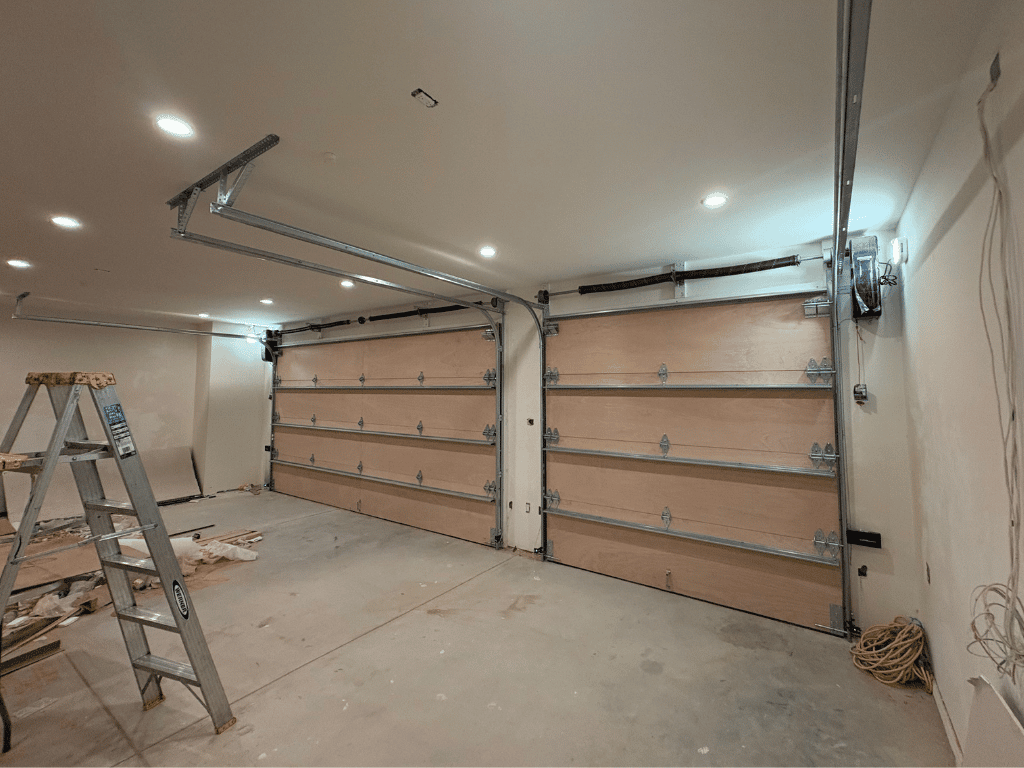
Burbank homeowners can safely handle minor garage door jobs, lubricating moving parts, adjusting sensors, replacing faulty, and, for those who are comfortable with basic DIY projects, even swapping worn rollers. However, anything involving springs, cables, or a door that has come off its tracks should always be left to a professional. Knowing which repairs are DIY-friendly is the key to saving money without putting yourself at risk.
When your garage door starts acting up-squeaking oddly, refusing to open, or getting stuck halfway-it’s more than just an annoyance. After all, it’s the largest opening in your home, and a faulty door leaves it exposed. Your first instinct might be to call a repair company, but here’s the good news: many common problems are simple enough to fix yourself with the right tools and a little guidance.
The tricky part is figuring out what’s actually wrong, and knowing whether it’s safe to handle on your own. That’s where this guide comes in. We’ll walk you through troubleshooting the most common garage door complaints, from a door that won’t close to a misbehaving opener. Along the way, we’ll help you sort the do-it-yourself fixes from the jobs best left to a professional.
Safety First: Essential Warnings Before You Begin
Before you attempt to repair a garage door yourself, take a moment to understand the risks involved. A malfunctioning door is far more than an inconvenience-it’s a genuine safety hazard. As the largest and heaviest moving object in most homes, its mechanisms operate under tremendous stress. Don’t ignore those forces and you risk serious harm. Here are the safety rules you can’t afford to skip.
For a deeper understanding of the forces at work in a spring system, take a look at this article: The Complete Guide to Garage Door Springs.
What are the most dangerous parts of a garage door?
A garage door’s heavy weight is held in balance by a system of high-tension springs and cables, and these are the riskiest parts for an untrained person to touch. Working together under enormous force, they lift a door that can weigh more than 300 pounds. Trying to adjust or remove them without the proper tools and training can cause severe injury or even death.
Torsion springs: Mounted on a metal shaft directly above the door, they hold huge rotational energy and can release it violently if they snap or get mishandled.
A torsion spring sits above your garage door, mounted on a metal hinge. Instead of stretching like other springs, it works by twisting and turning to lift the door.
Why do so many homeowners prefer it? For starters, it’s quieter, more durable, and safer than most tension springs-which is exactly why you’ll find torsion springs in the majority of modern garage doors.
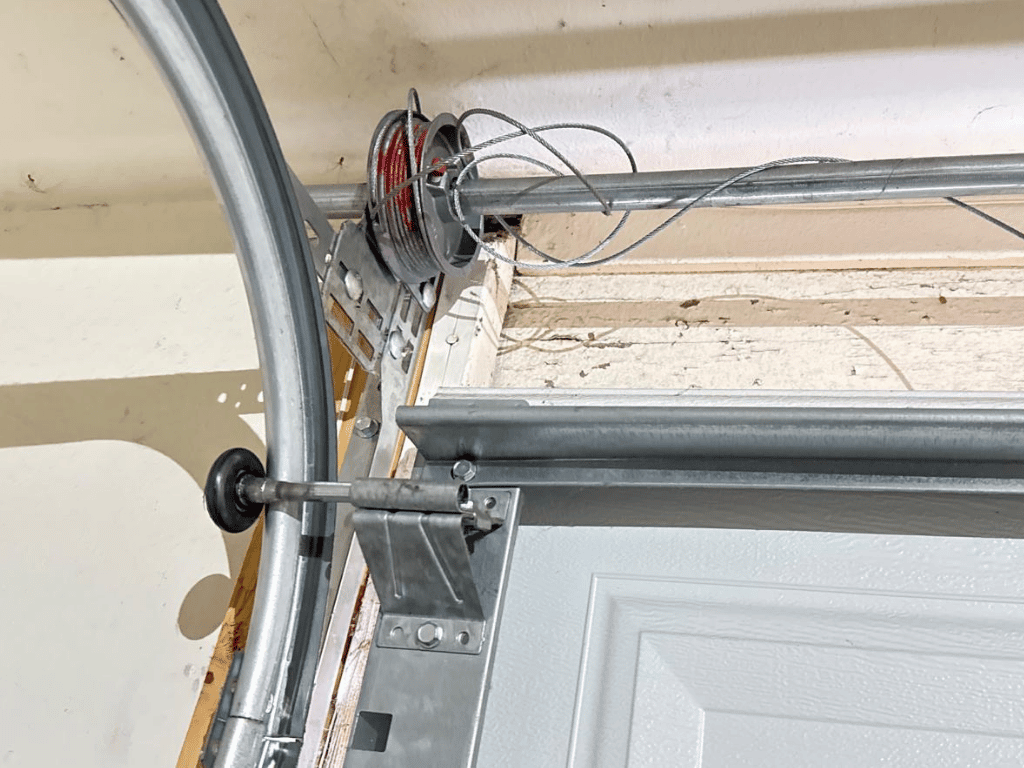
Lift cables: These steel cables tie the spring system to the bottom of the door. If a cable breaks or slips free under load, the door’s full weight can come crashing down.
What is the essential safety checklist before starting?
Always work through this checklist before you begin, and don’t take shortcuts. Your safety has to come first.
- Cut the power:
Unplug the opener from the outlet so no one can start the door while you’re working on it.
- Lock the door down:
With the door fully closed, clamp a C-clamp tightly onto the vertical track on each side, just above a roller. This creates a physical stop that keeps the door from moving on you.
- Wear protective gear:
Always put on safety glasses and heavy-duty gloves. Flying debris, parts under tension, and sharp metal edges are all real dangers.
- Keep fingers clear of moving parts:
At all times, keep your hands away from the joints between door panels, the tracks, and the rollers.
The golden rule of DIY work matters here more than anywhere else: when in doubt, don’t attempt the repair. For anything tied to springs or cables, calling a professional garage door service is the safest and most dependable move.
Troubleshooting: How to Diagnose Your Garage Door Problem
Before you launch into any complicated repair, a methodical check will often surface the problem quickly, since most faults come down to simple causes. The key is to work logically – start with the easiest fixes and move toward the trickier ones only as needed. Watch and listen carefully, because particular sounds and visible damage are your best clues.
Why won't my garage door open or close?
This tops the list of garage door complaints. Before assuming the worst, run through these basics:
- Check the power:
Is the opener plugged in and switched on? Inspect your circuit breaker.
- Rule out the remote:
Press the wall-mounted button. If that works, the issue is most likely your remote’s battery or signal.
- Check the safety sensors:
Make sure the two photo-eyes at the bottom of the tracks are aligned. Clear away any dirt, cobwebs, or other obstructions. A blinking light on one of the sensors often indicates misalignment.
- Hunt for obstructions:
Look over the tracks and the floor for anything physically in the door’s way.
Why is my garage door noisy or jerky?
Strange sounds or rough movement point to friction or wear. A quick look-and-listen check usually reveals the source:
- Rollers and tracks:
Check the rollers for a wheel that has come out of its bearing or a worn wheel. Check the tracks for dents or breakage, debris, or a bent track that may prevent the door from moving smoothly.
- Grinding noises:
A loud grind coming from the opener itself often signals stripped gears inside the motor – a frequent failure point.
- Squeaks and pops:
These usually trace back to dry or strained hinges. Make sure every bolt is tight and consider lubricating.
Why is my garage door uneven or crooked?
A lopsided door flags a serious problem with the tension system. Don’t run the door if you spot this. The tensioned parts carry extreme force and can cause severe injury if they give way.
- Broken springs:
Check the torsion springs above the door or the extension springs along the sides. A broken spring often shows a clear gap in the coil.
- Frayed cables:
Look over the lift cables running from the bottom of the door to the drums for fraying, rust, or signs they’ve slipped off.
Springs and cables aren’t a beginner’s repair. They sit under enormous tension and call for specialist tools and know-how, and attempting this advanced work untrained is extremely dangerous.
For guidance on safety standards or to find qualified help, get in touch – D-One Garage Doors And Gates is always ready to answer even your toughest questions.

Common DIY Repairs You Can Safely Handle
Plenty of everyday garage door issues don’t need a service call. A confident DIYer can manage several simple tasks, saving time and money while making the door perform better. The rule that matters: only work on parts that aren’t under tension. High-tension springs and cables are extremely dangerous and have to be left to trained technicians. Respecting the risks in any home repair is essential – OSHA points out that many injuries happen when established safety procedures get ignored or bypassed, a plain reminder of why following proper protocols matters every single time. The low-risk tasks below make an excellent starting point for any DIY garage door repair.
How do you replace worn or noisy wheels?
If your door is squeaking when opening or closing, there’s a good chance that one of the wheels is probably worn out. This is a simple fix that makes a big difference in both noise and smoothness.
- Symptoms:
Squeaking noises, jerky or jerky movement, visible wear on the wheels.
- Process:
With the door fully closed and disconnected from the opener, replace the wheels individually. Never touch the bottom wheel housing-it’s under spring tension. For the rest, loosen the screws holding each axle in place, slide the old wheel out, and install the new one.
- Parts needed:
High-quality nylon wheels are the better choice for quieter operation. Be sure to buy the correct size for your track.
If there is any uncertainty about performing a roller replacement yourself, we strongly recommend consulting a qualified garage door company. Professional installation helps ensure proper operation, long-term reliability, and safety.
How do you realign photo-eye safety sensors?
This is one of the most common garage door problems, and usually the easiest to fix. If the door starts to close and then immediately opens, misaligned safety sensors are the likely cause.
- Symptoms:
The door reverses as soon as it starts to close.
- Procedure:
Locate the two sensors on either side of the opening, near the floor. Check that there is no object blocking the eyelets. Once the path is clear, gently adjust each eyelet bracket manually until its LED indicator stops flashing and is usually solid green or orange.
Signs You Need Garage Door Repair: When to Call a Professional
The most important skill in any DIY project is knowing your limits. Many maintenance jobs are simple, but some repairs involve extreme stress and heavy components, making them especially dangerous for the untrained. Trying to fix it yourself could result in equipment failure, property damage, or serious injury.
Broken Torsion Spring
This is the most dangerous garage door repair. Springs are under extreme stress to lift the full weight of the door, and if they fail or are mishandled, the stored energy is released with a powerful, potentially fatal force. Do not attempt to adjust, remove, or replace them.
- Symptoms:
You hear a loud, sudden boom from the garage, or the garage door won’t open.

Broken or Loose Cables
Broken cables carry the same high tension as springs. A broken cable leaves the door unstable, held on only one side, placing a huge strain on the remaining hardware. Never attempt to move the door or touch the cables.
- Symptoms:
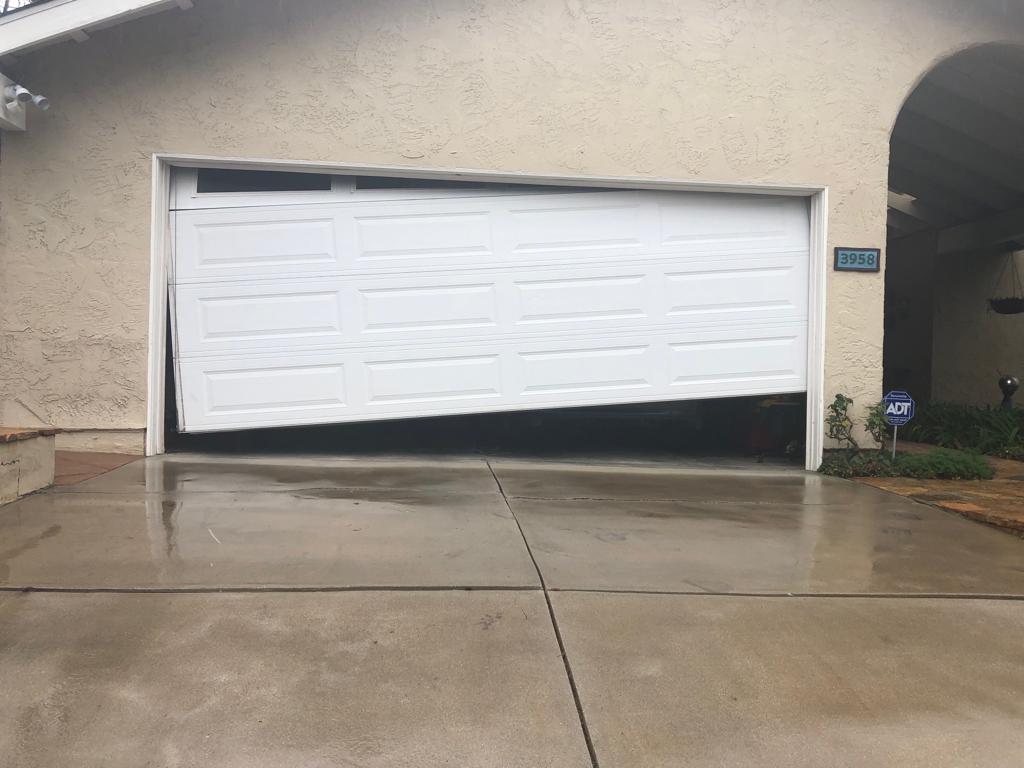
The door hangs crooked, one side higher than the other.
- Danger:
The remaining cable can break without warning, causing the door to collapse.
Door is off its tracks
Once the wheels leave the door tracks, the door is no longer secured – it becomes a heavy, unstable slab that could fall at any moment. Definitely do not touch or go near the door.
- Symptoms:
The wheels are visibly off the tracks, the door is bent, loose, or hanging.
- Danger:
The door is a serious hazard if it falls.
Preventative Maintenance: Stop Problems Before They Start
The most effective way to dodge an expensive, inconvenient repair is regular preventative maintenance. A simple 30-minute inspection every six months keeps your door running smoothly, quietly, and safely. This routine focuses on three areas – hardware, balance, and lubrication – catching small issues before they grow into big ones.
D-One Garage Doors And Gates offers this service starting at $79.
What should be on your 6-month maintenance checklist?
Follow these steps twice a year to spot trouble early. This simple process is the foundation of a healthy door.
- Look and listen: Run the door with the opener. Is the movement smooth or jerky? Listen for scraping, grinding, or squeaking that signals friction or alignment trouble.
- Tighten the hardware: Constant motion and vibration loosen critical hardware over time. Use a socket wrench to check and tighten the nuts and bolts on the hinges – but don’t overtighten.
- Test the door balance: An imbalanced door strains the opener motor. To test, pull the red release cord to disconnect the opener, then lift the door by hand to the halfway point. If it holds steady, the spring tension is right. If it drops or rises, the springs need professional adjustment.
How to Lubricate a Garage Door
Proper lubrication reduces friction, dampens noise, and extends the life of the door’s moving parts. Use a lubricant specifically made for garage doors (available at many stores, including Home Depot), not an all-purpose spray like WD-40, which can attract dust and clog components.
Spray the lubricant on the wheel tracks, hinges, and springs. Open and close the door several times to allow the lubricant to penetrate all moving parts, then wipe off any excess with a clean cloth to prevent drips and prevent dirt from building up.
How do you test garage door safety features?
Your door’s safety mechanisms are essential, and you need to test them regularly. If your door fails either test below, stop using the opener until the problem is fixed to avoid a serious accident.
- Auto-reverse test:
Lay a flat piece of timber on the floor in the door’s path and close the door. It should reverse the instant it touches the wood.
- Photo-eye sensor test:
With the door open, start closing it and wave a broom handle or your foot through the invisible beam near the bottom of the tracks. The door must stop and reverse immediately.
Take Control of Your Garage Door Repair
Repairing your own garage door comes down to a few core principles: put safety first, diagnose the issue correctly, and know your limits. This guide gives you what you need to troubleshoot common problems and handle the simple fixes yourself, saving time and money.
For the jobs that involve springs, cables, or a door off its tracks, leave it to the experts. D-One Garage Doors And Gates is ready to help Burbank homeowners with everything from a quick maintenance check to the most demanding repairs.